Purushottama Month (May 17 to June 15, 2026)
Purushottama Month, The Extra Month
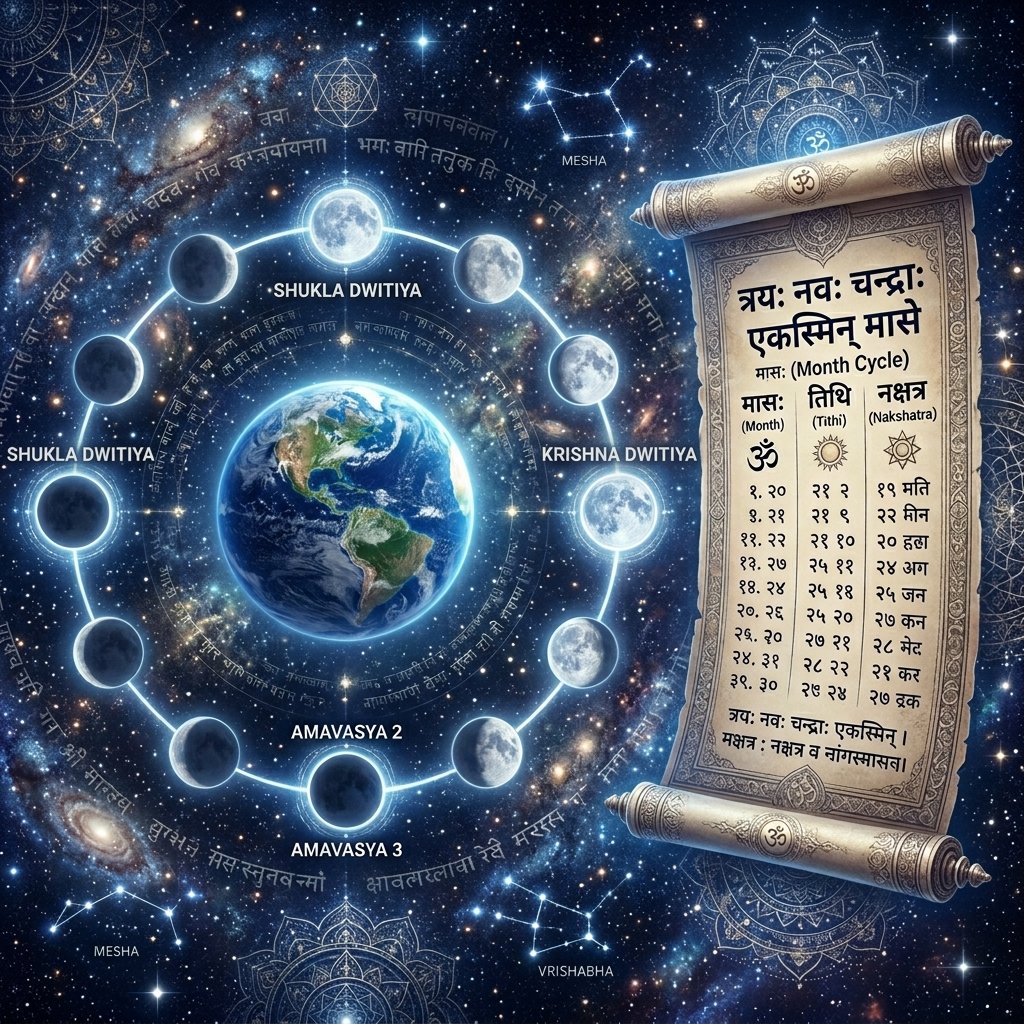
Purusottama month is the ‘Adhi-Masa’ (extra month.) in our annual vedic calendar. We observe the extra month when three new-moons (Amavasya) appear in the same vedic month.This year it appears in the month ofJyestha. When this same extra month appears in the month of ‘Āshar’(third vedic month) theJagannath Puri temple also performs the special ritual Nava-Kalevar, where Sri Baladeva, Sri Jagannath Deva, Subhadra Devi and Sudarshan Jiu’s deity form is renewed.
In 2026, Purushottam month is from Saturday 17th May to Monday 15th June.Purushottam month is the extra month which comes roughly every 2 years, 8 months, and 10-15 days.Actually, many people say that the Purushottam month is ADHIK MASA (extra month). Technically, this adhik-masa is applied to keep balance between lunar and solar cycles.
The smarta and shakta community call this month ‘mal mash’, meaning ‘dirty month’.But, sadhus (holy people), sadhakas (spiritual practitioners) and pious people of all sampradayas (lineages) respect this month with such names as Purushottam month i.e the month of Lila Purushottam (incarnation of pastime) Sri Krishna; Marjyādāpurushottam (incarnation of etiquette) Sri Ramchandra; and Prema Purushottam (incarnation of love) Sri Krishna Chaitanya Mahaprabhu. Three groups of devotees are observing this monththeir best way with carefulspiritual ritual. The devotees of Lord Ramachandra should read Ramayana, those devoted to Sri Krishna should read Bhagavad-gita and Srimad Bhagavatam, and those inclined to Sri Krishna Chaitanya Mahaprabhu should read Sri Chaitanya Bhagavat and Sri Chaitanya Charitamrita. All such devotees are observing and engaging themselves in austerities according to their capacity.

We should try to observe the following practices for the whole month:
At least three times (morning, noon and evening) each day we should chant Kaundinya Muni’s mantra, which is found in the Hari-Bhakti Vilas:
“Goverdhana-Dharam VandeGopālamGoparupinam
GokulotsavameeshaanamGovindamGopikāpriyam”
Meaning: Goverdhana-Dharam Vande: I worship the lifter of Govardhana Hill; GopalamGoparupinam:Who has the beautiful form of a cowherd boy, and who continually plays with the Gopas;Gokulotsavam-eeshaanam: He is the Lord of Gokula wherein everyday is a festival;GovindamGopikapriyam: He is the source of pleasure to the cows (cow herdingnine hundred thousand cows) and the most beloved of the Gopies.
He who lifted the Goverdhan Hill, that is Gopal, in the form of a Gopa, the cowherd boy. Who is the master of festivals in Gokul Mahavan, that Govinda who goes for cow-herding is the most beloved of all the gopis (Radharani’s assistances).
In order to observe the Purushottam month, one should follow the minimum rituals as follows:
- Try to maintain celibacy for this month.
- Instead of sleeping on a comfortable bed, sleep on the floor (use a thin mat or blanket if necessary)
- Bathe daily BEFORE SUNRISE.
- Get up 1 hour and 36 minutes before sunrise (during the Brahma-Muhurta) or as early as possible and chant ‘Pancha-Tattva’ and ‘Mahamantra’ at least 12 times.
- Each day chant a fixed number of rounds. You can increase rounds this month according to your ability. For example, if you usually chant 16 rounds daily then in this Purushottama month try to chant at least 24, 32, or 64 rounds according to your convenience.
- If your schedule allows then perform puja daily by yourself. At least offer a ghee lamp to Radha-Krsna Deities or Sri Jagannath Deities or Their Picture. If possible, offer this twice in a day (morning and evening) while chanting the Sri Jagannatha-Astakam or any song about Sri Sri Radha-Krishna’s glories.
- Daily Tulasi Devi’s Parakrama, morning and evening.
- Take a vow to remain peaceful, and become 100% truthful throughout the month, just as a devotee should be throughout their entire life.
- Please be careful not to blaspheme anyone, especially the Vaisnavas and brahmanas.
- Try your best to please Sri Radha and Sri Krsna by performing spiritual practices according to your capacities.
- No cutting of hair or nails (optional).
- No cooking in mustard or sesame oil or rubbing these oils on your body. It is best to cook with ghee, and eat boiled Hobisanna (Atap-rice mixed with Dal and vegetables, but no eggplant or tomato, without salt if possible).
This month is called Mal-Masa (dirty or useless month) because all ritual forms of karma-kanda (reward seeking), pujas and yajnas (fire sacrifices) don’t give any results this month. Therefore, the smarta and other non-vaisnava sects do not perform any so called auspicious materialistic rituals, including weddings, house-warmings, etc. OurGaudiyaVaisnavas, however, disagree, saying that as all days, weeks and months are created by the Supreme Lord for observing devotionthere are no days not suitable for devotional practices. Therefore, Vaisnavas do not use the term Mal-Masa. Conversely, they consider this adhik-mas as the best month for all types of spiritual practices. Therefore, we GaudiyaVaisnavas try our best to follow devotional rituals as our previous teachers have established for the month.
Our previous teachers instructed us that in this month we have to observe devotional activities in a special manner. Then quickly and easily we can destroy the dirt and contamination caused by our sins, ignorance and offenses (Aparadhas).
The Puranas say that the Supreme personality of Godhead, Sri Krsna’s FAVORITE MONTH is Purusottama Month. Sri Krsna has not only personally created this month, but He also named it after Himself. Remember, Sri Krshna alone is the Supreme Personality of Godhead, Purusottama. As Swayam Bhagavan, Sri Krshna is the most magnanimous, topmost origin of all the incarnations (avataras). And so Purusottama Month is the topmost, super best, most powerful spiritual reward giving month among all themonths.
Purusottama Month is the holiest month, far superior to the pious Vedic months of Vaisakha (April-May), Karttika (October-November) and Magha (January–February), which the Vedas praise as the three best reward-giving months of all the 12 months of the year. Not only on the earth planet, but all over the universe Purusottama Month is honored and worshiped by all devotees, sages, gods and goddessesand even Laksmi Devi Herself.
If one sincerely worships Radha and Krsna in Purusottama month, he will attain everything he wants. One who observes Purusottama-vrata will burn up the reactions of all his previous bad karma and attain the direct service of Radha and Krsna. Purusottama month is the best month for all spiritual advancement because Krsna overlooks all the aparadhas. Residence in the holy dhamas during Purusottammonth yields a 1000 times the benefit.
All these sastric quotations are from Padma and SkandaPurana:
- Lord Sri Krsna: “Purusottama Month has all the power I have to bless its observer. One who followsPurusottama-vrata will destroy all his past sinful reactions. Without performing Purusottama-Vrata, one cannot perform pure devotional service. The value of Purusottama month is far more valuable than all other types of austerities and religious activities mentioned in the Vedas. Anyone who observes Purusottama-vrata will return to My abode, Goloka, at the end of his life.”
- Durvasa Muni: “Just by bathing in a holy river during Purusottama Month, one becomes free from sins. The glory of all other months is not equal to one-sixteenth of the glory of the Purusottama Month. By bathing in a holy place, giving charity and chanting the Holy Name of Krishna – Hare Krishna Hare Krishna Krishna Krishna Hare Hare / Hare Rama Hare Rama Rama Rama Hare Hare-during Purusottama Month, all miseries are destroyed, one attains all kinds of perfection and fulfills all his desires.”
- Valmiki Muni: “By observing Purusottama-Vrata, one attains more benefit than performing one hundred horse sacrifices. All holy places live within the body of a Purusottama Month vrati (an observer of this penance). Anyone who faithfully performs Purusottama-vrata will go to Goloka Vrndavana.”
- Narada Muni: “Purusottama Month is the best of all months, vratas and austerities. Just by faithfully hearing the glories of Purusottama Month, one attains Krsna-bhakti and immediately nullifies his sinful reactions. One who performs Purusottama-vrata properly will attain unlimited piety and spiritual merit (Bhakti UnmukhiSukrti) and go to the spiritual world.”
- Naimisaranya Sages: “Merciful Purusottama Month acts like a desire tree to fulfill a devotee’s desire.”
- Hari-bhakti-vilasa (Vol 4, Vs 437): “During Purusottama Month, one should remember Lord Krshna, and then donate thirty-three milk cakes cooked in ghee to grhasthaVaisnava brahmanas, who are well versed in sastras. Failing to do so, one loses all the piety he accumulated in the previous year.” Comment: Vrndavanavaisnavas usually observe this by donating two kilos of good quality milk cake from a sweet shop to a few Vaisnava pandas or pujaris or good temple devotees.
ADDITIONAL OBSERVANCES FOR PURUSHOTTAMA MONTH
During the holy month of Purushottama, certain spiritual practices are observed by devotees: Recitation of Sri Radha Kripa Kataksha, Sri Krishna Kripa Kataksha and Sri Jagannathastakam in the mornings;recitation of ChauragraganyaPurusashtakam in the afternoons; performance of japa or chanting as instructed by Kaundinya Muni; Deep daana or ghee-lamp offerings in the evenings at the Vishnu, Krishna or Ram mandir; and last but not the least, reading the Brahmastava, 40 slokas in Sanskrit, from the Bhagavatam, chapter 14, Canto 10. This spiritual technique, when performed with devotion in Purushottama, can bestow manifold results on the sadhak. Observance of Purushottamavrata brings eternal joy to the soul.
This extra month is called Purushottam month. Therefore, we have to remember our worshipable Godhead, Sri Sri Radha Krishna through chanting Their Holy-Name—Hare Krishna Mahamantra; offering Them ghee-lamp once in the evening or twice in morning & evening with chanting Their glories which is written by our previous teacher (Guru-Varga). Such works include the VrajePrasiddhamNavanitaChouram (official name: Chourastakam which is written by Bilvamangal Thakur; NamamiSaramSachidanandaRupam, official name: Damodar-Astakam which is written by Krishna DvaipayanMahamuni Veda-Vyasa in the Padma Puran and chanted by SrilaSatyavrata Muni;or Jagannatha Astakam or any Astaka/Prayer which is connected with Lord Sri Ramchandra, Lord Sri Krishna, Lord Sri Chaitanya Mahaprabhu etc. Also, honour austere prasadam (like Hovisanna,i.e boil rice & dhal with selected vegetable and pure ghee or honor prasadam only, do not accept unoffered food etc.)
SRILA BHAKTIVINODA THAKURA’S Purusottama Month VRATA:
Srila Bhaktivinoda Thakur’s personal practice during this month was to perform the NirapeksaVrata (neutral vow), which is 30 days of concentrated, one pointed worship and service to Sri SriRadha-Govinda’s conjugal form by hearing, chanting, remembering Their divine names (nama), forms (rupa), qualities (guna) and pastimes (lila). All day and night he would hear about Bhagavan Sri Sri Radha-Krshna’s glories, chant the Hare KrsnaMahamantra, and take mahaprasadam only.
Vedic literature explains the glories of Purushottam month. One example is of Draupadi. In her previous life, she was the daughter of Sage Medha. She heard the glories of Purushottam month from Durvasa Rishi but failed (or ignored) to follow it. As a result, she suffered in that life, and in her next life too as Draupadi, along with her five husbands, were forced into exile for 12 years, and in the 13th year, they had to be incognito (under a disguise). During her incognito year, she was harassed by Kichak – the soldier general of the Virat kingdom. Also, Jayadrath tried to abduct her whilst they were in exile. She became one of the main reasons for the Kurukshetra battle. Her five sons were killed by Ashwathama, which aggrieved her very much.According to the instructions of the Supreme Lord Sri Krishna, the five Pandavas (including Draupadi) observed Purushottam month and regained their royal position after said exile. As a result King Yudishthir became the emperor of the world.
If anyone observes this month properly, then the benefit they get will be a million times more than a vow observed in a regular month. During Purushottam month, people vow to perform activities that will only please the Lord and reject activities that are dishonest and do not please the Lord.
Sage Narayan once explained to Narada Muni in Badrikashram (in Himalaya) how to correctly observe the Purushottam month:
One should bathe during Brahma Muhurta. Bathing at that time period in the ocean or in a river is considered to be the ‘uttamsnyan (Bathing)’ – the best place. Bathing in a well, lake or a pond is madhaymsnyan – ‘middle category’. Bathing inside the house is Grihesnyan – the least preferable option. After bathing, one should wear fresh devotional clothes, sit on a purified asana (sitting mat), do achaman, apply Vaishnava tilak (urdha-punda), follow minimum ritual and according to one’s qualification, they should worship Krishna.
Even those who are not devotees should observe as follows:
With regards to what should and should not be consumed, it is better to do ‘hobishanna’.Hobishanna means to boil grains (rice/millet/wheat/buckwheat/quinoa) mixed with dhal (lentils) and vegetables, adding only rock salt and ghee.
Vegetables and other items that can be consumed are:
green peas, spinach, ginger, radish, potato, taro, yam, banana, yogurt, clarified butter (ghee), mango, jackfruit, long pepper, cumin, tamarind, custard apple (ātā), gooseberry (amalaki), raw sugar, sugar candy (michhri), and ash gourd (Chal-Kumra). Only cow’s milk, buffalo milk and goat’s milk can be consumed. All other types of milk are non-vegetarian (according to the Vedic vision).
Food should not be cooked with oil, but instead, boiled and complimented with pure cow’s ghee (or as an alternative to ghee peanut oil or extra virgin olive oil can be used). The benefits of observing a fast and doing hobishanna are the same. All food cooked should be offered to the Lord and then honoured as prasad. However, we should not accept any grains on the day of Ekadashi. On Ekadashi one should only take fruits, roots, water and milk.
Restricted foods:
Fish, meat, onion, garlic, honey, mustard seeds, chick-peas, chickpeas dhal, sesame oil, mushroom, carrots, green-squash (loki or Lau), eggplant (Begun), tomato, all types of beans, (including soya beans), and any kind of intoxication. Anything containing animal extracts should not be consumed, mashuri dhal (red lentils) and lime (Gnora-lebu) should not be taken. Cooked rice any other applicable food in this month from the previous day should be avoided.
In this month, we should absolutely avoid criticism of gods and goddesses (dev and devi), Veda, Guru, cow, anyone observing this vow, women, kings and saintly persons (Sadhu Ninda).
The observer should hear Srimad Bhagavatam and Mahajana-Padavali kirtan with glorifying the Supreme Lord and His pure-devotees. Devotees should try their best to worship Shaligram.
This vow is better than performing fire sacrifice. This is because the yagna takes one to heaven (which is part of the material planetary system where we have limitations). When one’s pious credit runs out, they will have to leave heaven and return to this material world again.
Whoever performs this Purshottamvrata will have the holy places (tirtha), gods, and goddesses reside in the person’s body. One should offer a ghee lamp twice a day to the Lord. If ghee is unavailable, then one can use sesame oil instead. This vrata will give sixteen times more benefit than the benefit one gets from Brahma gyan (Impersonalism), Ashtanga yoga (physical yoga), Sankhyagyan and tantra (black magic).
In ancient times, Maharaj Indradyumna, Maharaj Jaubanashva, and Maharaj Bhagirath all observed this vow and they got the benefit of reaching the sameabode as the Lord – samipya (one of the 5 types of liberation – mukti).
Our ultimate goal is to observe any Vrata for satisfying the Supreme Lord (Sri Sri Radha Krishna and Sri Chaitanya Mahaprabhu).This is the way to uplift ourselves spirituality. Here spirituality means to fix our mind towards Lord and His services. This is our ultimate goal to be here with this human form in this miserable mundane world.
I humbly pray to my Guru-Varga for giving me the strength to observe Purushottom Vrata with purity and sufficient rounds of chanting the Hare Krishna Mahamantra on beads.
An unworthy servant of Lord Chaitanya’s loving Mission.
B. B. Bodhayan
President of Sri Gopinath Gaudiya Math.